
Five Questions to Ask Before Designing Your Brand
Useful visual identity begins with clarity about your business and audience.

Who are your customers?
Think about the people you hope to serve and the problems they are trying to solve. A luxury retailer and a local repair business may need very different visual voices.
What should the brand communicate?
Pick a few meaningful qualities such as practical, energetic, calm or precise. Use these to judge colours, typography, images and tone rather than choosing everything because it looks fashionable.
Where will it appear?
Check whether the identity must work on a website, packaging, social posts, small labels or signage. Ask for usable file formats and clear rules to keep future materials consistent.
Test real applications
Before approving a logo, see how it behaves on a small browser tab, an email signature, a business card and a larger sign. Fine details may disappear at small sizes. Request formats suitable for both digital and print work, and ensure you know which assets can be modified later.
Keep a simple brand reference
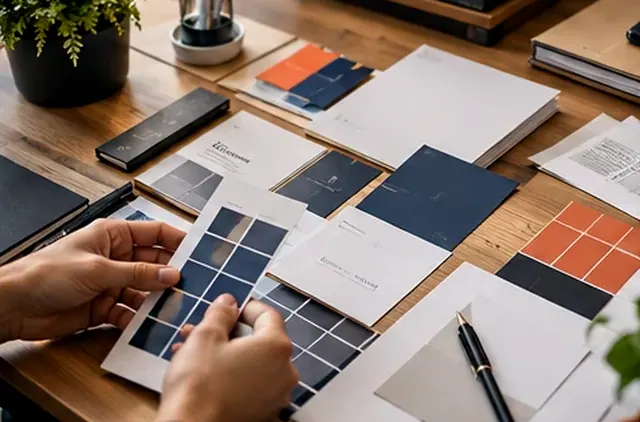
A basic reference can record your principal logo, approved colours, font choices, image style and preferred tone of voice. You do not always need a large brand manual, but consistency helps the website, social profiles and printed materials feel related.
Ready to use these ideas?
Adapt the steps to your business and market. If you need hands-on help, tell us what you want to accomplish and we can discuss a practical scope.
Start Your Project ↗Explore more ideas
 Practical guideHow to Prepare for Your First Business WebsiteA little preparation helps your website explain the right things from day one.Read more ↗
 Practical guideA Beginner’s Guide to Starting an Online StoreSelling online starts with clear products and dependable order handling—not the checkout design alone.Read more ↗
 Practical guideFive Questions to Ask Before Designing Your BrandUseful visual identity begins with clarity about your business and audience.Read more ↗